Northern Tanzania
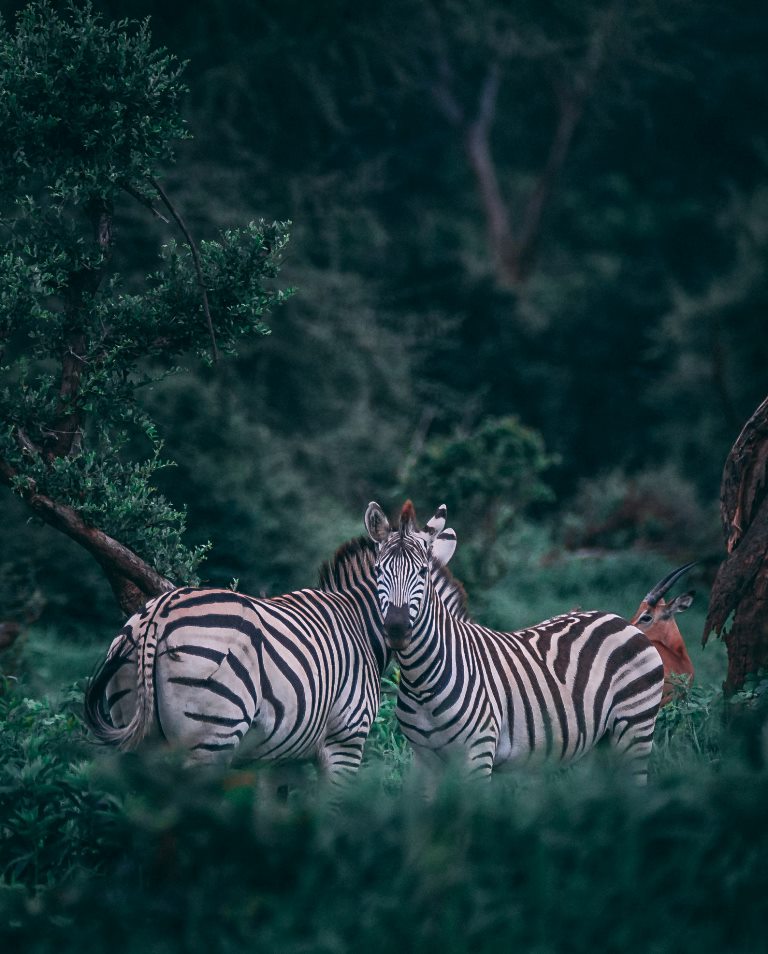
Arusha National Park
The Park is gifted with variety of attractions ranging from wildlife inhabiting the wilderness to craters and mountain peaks.
This beautiful Park has often been called a “little germ” and rightly so. It is only ½ an hour by tarmac road from Arusha town, the safari center of Northern Tanzania. With mountains, valleys, lakes, and small plains clothed in green, it has a wonderful feeling of peace and solitude. It is dominated by Mount Meru, which at 4,566 m (14,980 ft) is the 5rd highest free standing mountain in Africa.
This second highest mountain in Tanzania offers unforgettable experience and serves as acclimatization refuge before climbing Mount Kilimanjaro.
Lake Manyara National Park
The lush green vegetation consisting of tall trees of the ground water forest, the tree climbing lions, the soda lake inhabited with thousands of pink-hued flamingos, large water birds and the troops of baboons and blue monkeys and the rift valley escarpment make your safari to this area unforgettable.
The park derives its name from a plant called Euphorbia tirucalli, known as Emanyara in Maasai language and covers an area of 648.7 km2.


Serengeti National Park
The Serengeti National Park is one of world’s greatest game parks. Meaning “endless plains” in the Maasai language, the Serengeti continues to be an ongoing source of inspiration to writers, filmmakers and photographers alike. It is world-famous for the role it plays in the annual Great Migration, when an estimated two million herbivores – mostly wildebeest – migrate from the Serengeti to Kenya’s Masai Mara Game Reserve. Hundreds of thousands of animals die along the way and the drama of this epic seasonal journey is a gripping, deeply moving experience and a wonderful photographic subject.
Large prides of lions laze easily in the long grasses, plentiful families of elephants feed on acacia bark and trump to each other across the plains, and giraffes, gazelles, monkeys, eland, and the whole range of African wildlife is in awe-inspiring numbers.
But it’s not just the wildebeest that use the Serengeti to migrate. The adjacent reserves of Maswa and Ikorongo, the Ngorongoro Conservation Area, and the Masai Mara Game Reserve in Kenya all allow the animals and birds of the area a free range of movement to follow their seasonal migrations. Indeed, in the wake of the wildebeest migration, many of the less attention-grabbing features of the Serengeti are often overlooked.
Tarangire National Park
Tarangire National Park has some of the highest population density of elephants anywhere in Tanzania, and its sparse vegetation makes it a beautiful and special location. Located just a few hours’ drive from the town of Arusha, Tarangire is a popular stop for safaris travelling through the northern circuit on their way to Ngorongoro and the Serengeti. The park extends into two game controlled areas and the wildlife is allowed to move freely throughout.
Before the rains, droves of gazelle, wildebeest, zebra, and giraffes migrate to Tarangire National Park’s scrub plains where the last grazing land still remains. Tarangire offers unparalleled game viewing and has more elephants than any other park. Families play around the ancient trunks of baobab trees and strip acacia bark from the thorn trees for their afternoon meal.
Ngorongoro Conservation Area
The spectacular landscape of the world renowned Ngorongoro Crater has to be seen to be believed. It forms part of the Ngorongoro Conservation Area (NCA) within the Serengeti ecosystem and the Crater itself is home to more than 25 000 large mammals. Once a large volcano that later collapsed, it is now the largest intact caldera in the world.
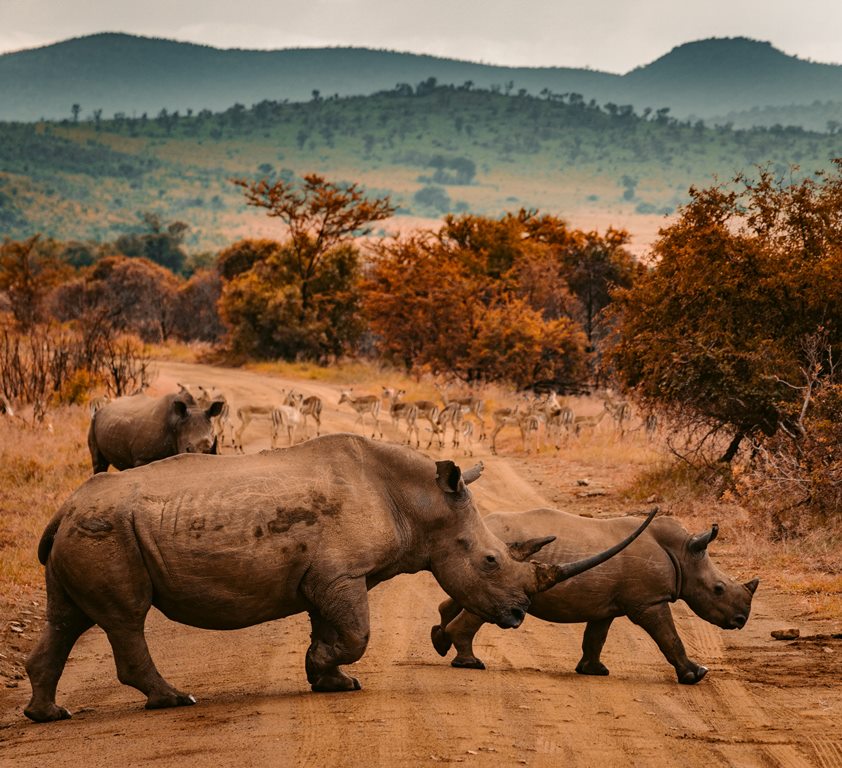
The Ngorongoro Crater is often called ‘Africa’s Eden’ and the ‘8th Natural Wonder of the World,’ a visit to the crater is a main draw for tourists coming to Tanzania and a definite world-class attraction. Within the crater rim, large herds of zebra and wildebeest graze nearby while sleeping lions laze in the sun. At dawn, the endangered black rhino returns to the thick cover of the crater forests after grazing on dew-laden grass in the morning mist. Just outside the crater’s ridge, tall Masaai herd their cattle and goats over green pastures through the highland slopes, living alongside the wildlife as they have for centuries.
Ngorongoro Conservation Area includes its eponymous famous crater, Olduvai Gorge, and huge expanses of highland plains, scrub bush, and forests that cover approximately 8300 square kilometres. A protected area, only indigenous tribes such as the Masaai are allowed to live within its borders. Lake Ndutu and Masek, both alkaline soda lakes are home to rich game populations, as well as a series of peaks and volcanoes and make the Conservation Area a unique and beautiful landscape. Of course, the crater itself, actually a type of collapsed volcano called a caldera, is the main attraction. Accommodation is located on its ridges and after a beautiful descent down the crater rim, passing lush rain forest and thick vegetation, the flora opens to grassy plains throughout the crater floor. The game viewing is truly incredible and views of the surrounding Crater Highlands out of this world.